For many modern campers, a portable power station is the heartbeat of their setup. It keeps the fridge running, the phones charged, and the lights on when the sun goes down. However, the biggest challenge with portable power solutions isn’t using them: it’s keeping them topped off during extended road trips. When you are moving between destinations or boondocking for days at a time, you need a multi-layered charging strategy to ensure you never run out of juice.
Maintaining a full charge requires more than just a single cable. It involves understanding the physics of DC charging, leveraging the efficiency of solar panels, and knowing when to bring in heavy-duty backup equipment like an inverter generator. This guide breaks down the professional tactics for keeping your gear powered throughout even the longest cross-country adventures.
Charging While You Drive: The DC Strategy
The most efficient way to maintain your power levels is to charge while your vehicle is already running. Your alternator is a massive power plant that generates far more energy than your car’s basic systems require. On a long road trip, those hours spent behind the wheel are prime opportunities to harvest that excess energy.
Using the 12V Accessory Port
The simplest method is using the 12V DC cable (often called a cigarette lighter adapter) that comes with most portable power stations. While convenient, this is usually the slowest charging method, typically limited to 60W to 120W of input. On a 1,000Wh power station, a full charge via this method could take 10 to 15 hours.
To maximize this, always plug in the moment you start the engine. Even if you are only driving for two hours between stops, that is a significant amount of energy added back into the battery. It is critical to ensure your vehicle’s port is only active when the ignition is on; otherwise, you risk draining your starter battery and being unable to start your car the next morning.
Advanced DC-to-DC Charging
For serious travelers, a dedicated DC-to-DC charger is a game-changer. These devices are hardwired into your vehicle’s electrical system and can push much higher wattages: often 300W or more: into your power station. This bypasses the limitations of the thin wiring found in standard 12V accessory ports. If you are serious about camping gear and power management, upgrading your vehicle’s wiring to support higher DC input is a worthwhile investment.
Stopping for the Sun: Maximizing Solar Efficiency
Solar panels are the ultimate silent partner for the off-grid camper. However, keeping a portable power station charged via solar on the road requires a strategic approach. You cannot simply throw a panel on the ground and expect 100% efficiency.
Deploying Portable Solar Kits
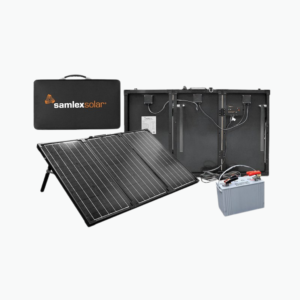
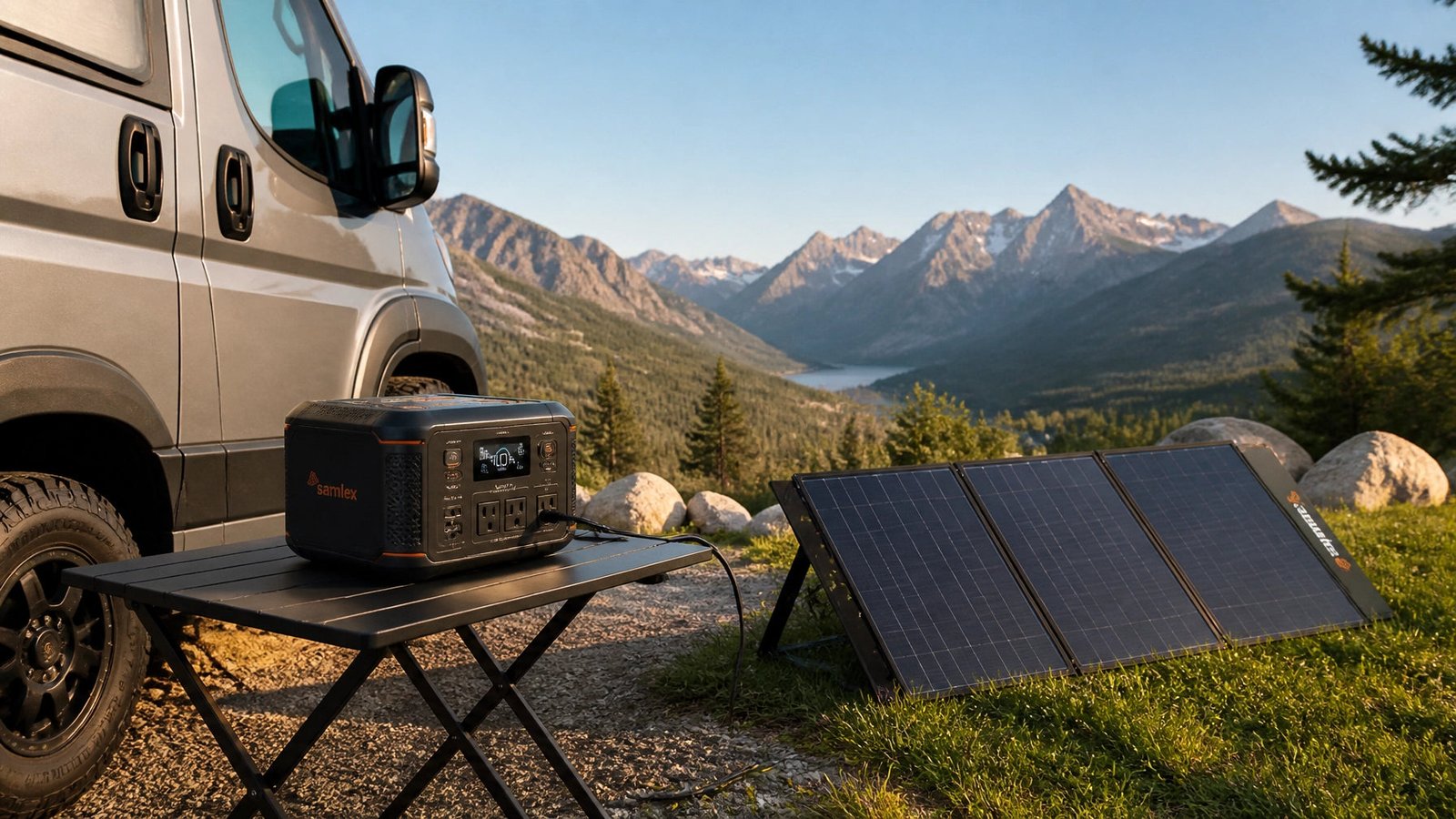
During midday stops or while set up at a campsite, portable panels like the Samlex Portable Solar Charging Kit are superior to roof-mounted options for one reason: adjustability. While roof panels are fixed, a portable kit allows you to angle the panels directly toward the sun.
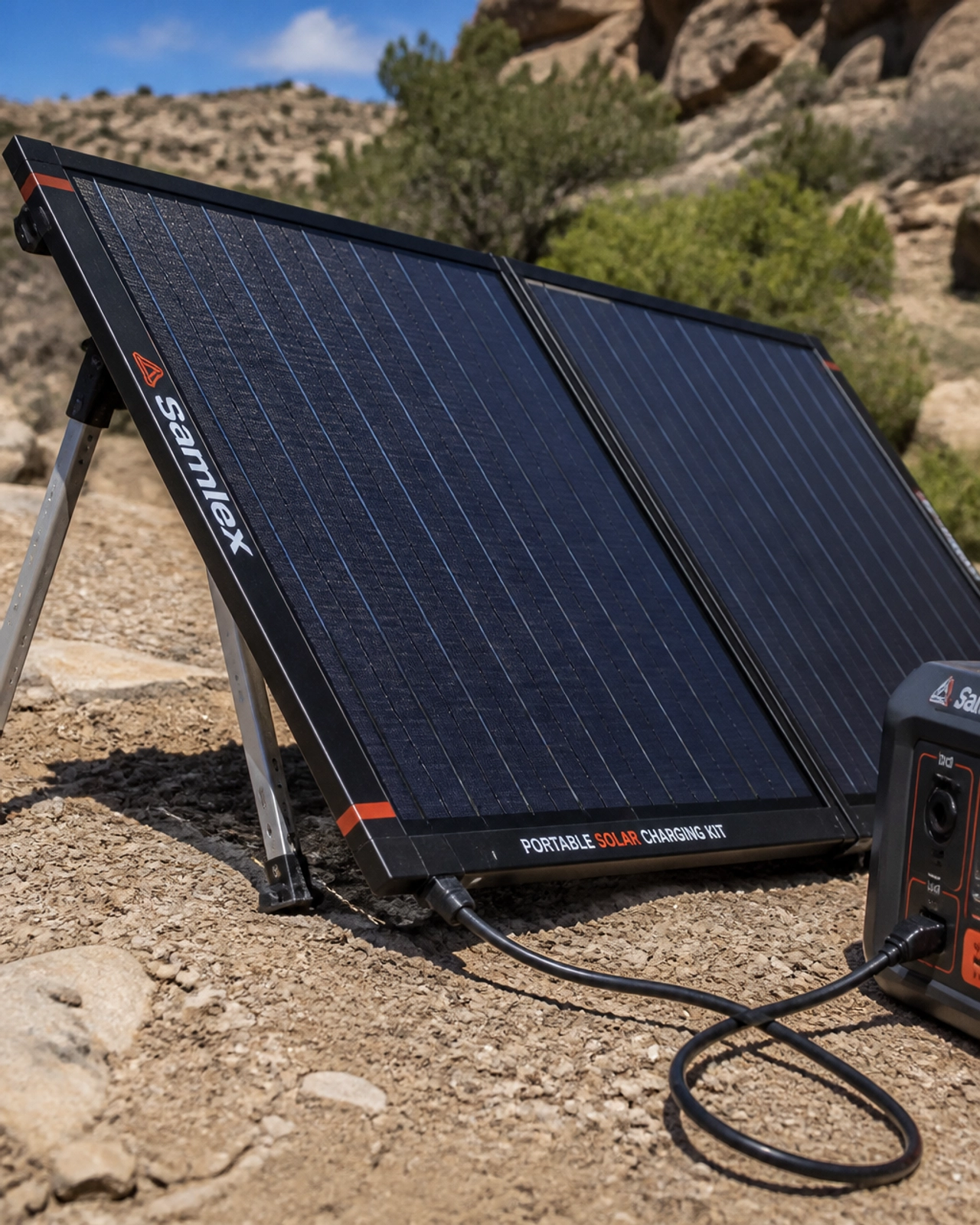
The Samlex kits, available in 90W and 135W configurations, feature adjustable aluminum legs. By re-adjusting the angle of your panels every few hours as the sun moves across the sky, you can increase your energy harvest by up to 30% compared to panels lying flat. This “active” solar management is the key to surviving long trips without shore power.
Managing Shade and Weather
The biggest enemy of solar charging is shade. Even a small branch shadowing a single corner of your panel can drop the power output by half. When you stop for lunch or a hike, scout for a patch of ground that will remain in direct sunlight for the duration of your stay. Use the length of your solar cables to park your vehicle in the shade while keeping your panels in the sun: this keeps your vehicle interior cool while maximizing your charge rate.
The Generator Advantage: Reliable Backup Power
No matter how many solar panels you have, nature doesn’t always cooperate. Long stretches of rain, heavy forest canopy, or high energy consumption (like running a portable heater or a heavy-duty blender) can drain your station faster than the sun can fill it. This is where a portable inverter generator becomes an essential piece of your portable power solutions kit.
When to Use a Generator
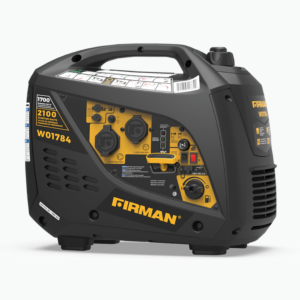
An inverter generator like the Firman Inverter Portable Generator provides a massive amount of power in a short window. If your power station is sitting at 10%, running a generator for just two hours can often bring it back to a full charge.
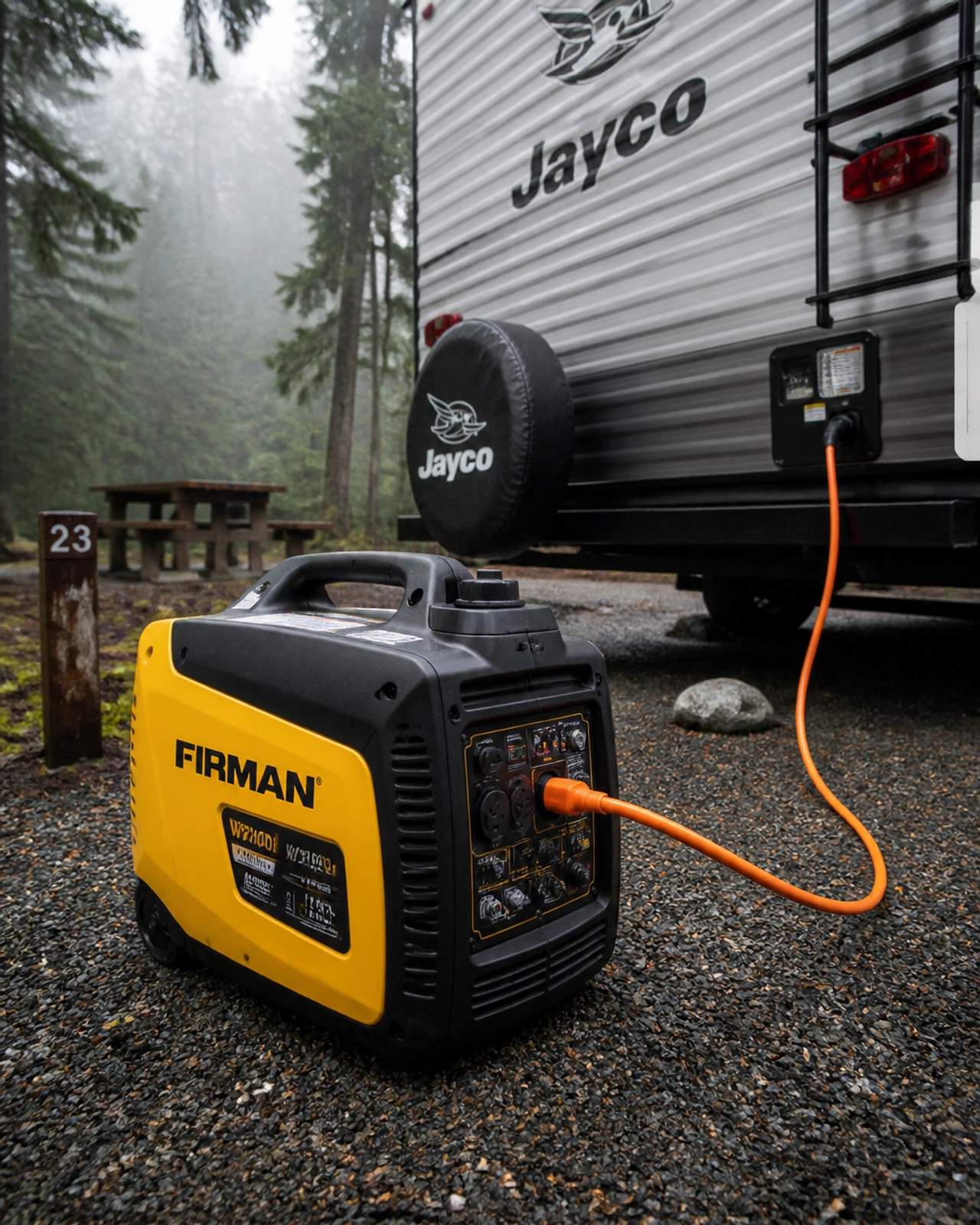
Inverter technology is crucial here because it produces “clean” power. Unlike standard open-frame generators, inverters provide a steady sine wave that is safe for the sensitive electronics found inside modern portable power stations. The Firman units are also designed to be significantly quieter, making them more acceptable for use in campgrounds where noise ordinances are in effect.
Optimizing Your Power Usage on the Road
Charging is only half of the equation; the other half is conservation. To make your charge last longer between stops, you must become an expert at power management.
- Eliminate Ghost Loads: Even when you aren’t using a device, if it is plugged into the AC outlet of your power station, the inverter is drawing power. Always turn off the AC and DC buttons on your station when they aren’t actively in use.
- Use DC Native Devices: Whenever possible, use DC power (12V) rather than AC. Converting battery power (DC) to wall-outlet power (AC) involves an efficiency loss of roughly 10-15%. Use 12V chargers for your laptop and phones to bypass the inverter entirely.
- Temperature Control: Keep your power station in a climate-controlled area of your vehicle. Batteries are less efficient in extreme cold and can be damaged by extreme heat. A power station kept in a hot trunk all day will charge slower and discharge faster.
Shore Power: Opportunistic Charging Strategies
A long road trip often involves occasional stops at civilization. Use these moments to your advantage. Many rest areas, coffee shops, and even some public parks have accessible AC outlets. Carrying a high-quality extension cord, such as the Mighty Cord RV Extension Cord, allows you to reach outlets that might be awkwardly placed.
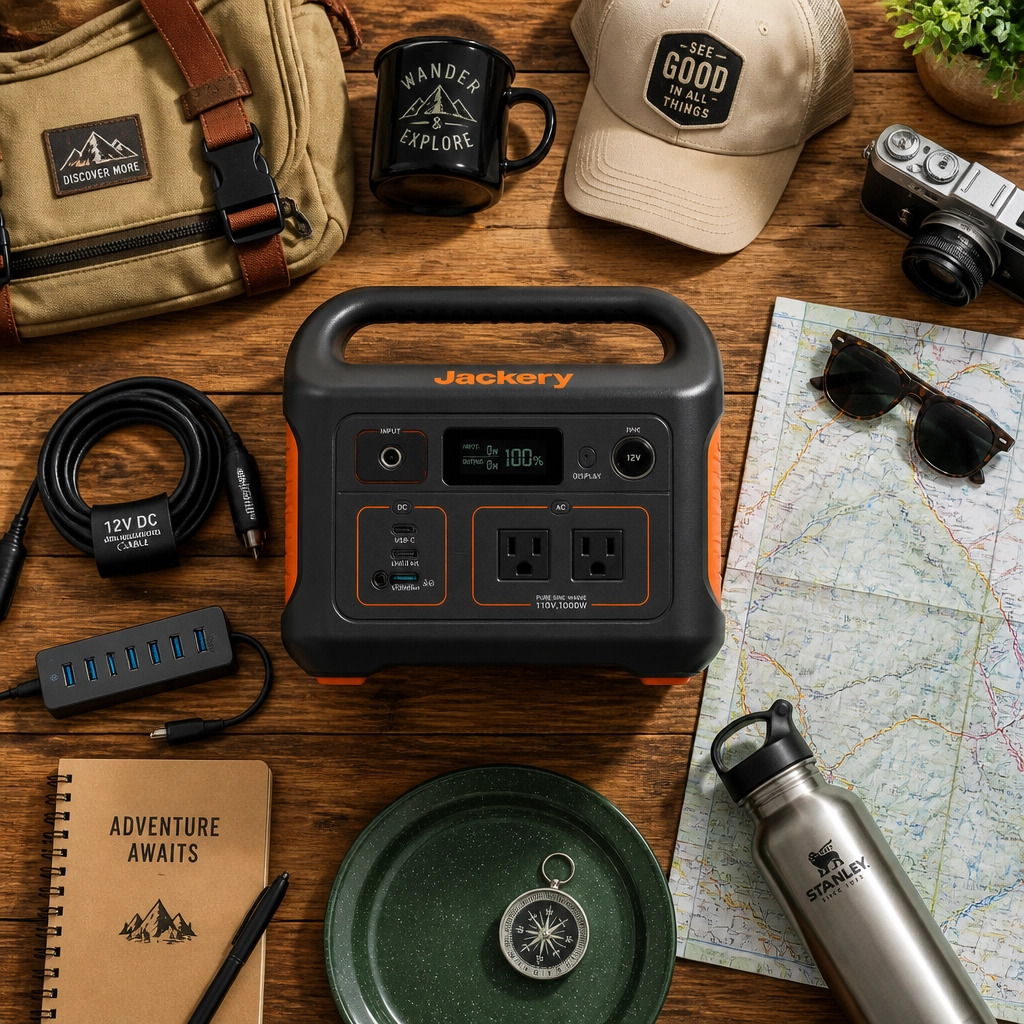
When you stay at a campground with hookups, don’t just rely on the shore power for your RV. Plug your portable power station directly into the pedestal or an interior outlet to ensure it is at 100% before you head back into the wild. These “top-off” moments are the safety net of any long-distance traveler.
The Power of Redundancy
The secret to a successful long-term road trip is redundancy. Relying solely on your vehicle’s 12V port is a recipe for a dead battery by day three. Relying solely on solar is a gamble with the weather. The most successful campers use a “Triple Threat” approach:
- Primary: DC charging while driving (Daily maintenance).
- Secondary: Solar panels when parked (Passive gains).
- Emergency: Inverter generator (Rapid recovery).
By combining these methods and using high-quality equipment, you turn your vehicle into a self-sustaining mobile basecamp. You stop worrying about whether you have enough power for the night and start focusing on the next destination.
Looking for camping gear, RV essentials, and campsite upgrades? Visit ChiefCamper.com and make your next adventure easier.