If you’re shopping for a replacement RV refrigerator, you’ve probably noticed the market has split into two very different technologies: the propane-and-electric absorption fridge that’s been standard in campers for decades, and the newer 12V DC compressor fridge that works more like the one in your kitchen at home. Both do the same job, but they get there in completely different ways, and that difference matters for how you camp.
This guide breaks down how each type actually works, where each one shines, and which questions to ask before you buy — whether you’re replacing a failed absorption unit or building out a rig for serious off-grid travel.
How Absorption Refrigerators Work
Absorption fridges have no compressor and no moving parts. Instead, they use a heat source — propane, AC shore power, or in some models 12V DC — to drive a chemical cooling cycle inside a sealed ammonia system. Because there’s nothing mechanically pumping refrigerant, they run silently, which is a big part of why they’ve been the RV standard for so long.
The tradeoff is that the chemical cycle needs the unit to sit reasonably level to circulate properly. Park on a steep pad or leave your leveling blocks at home, and an absorption fridge can struggle to cool evenly — some RVers have had good luck running slightly off-level for short periods, but manufacturers generally recommend leveling the rig before running one for any length of time. Absorption units also tend to cool more slowly, especially in hot weather, and typically take several hours (sometimes overnight) to fully pull down to temperature after being loaded or restarted.
How 12V DC Compressor Refrigerators Work
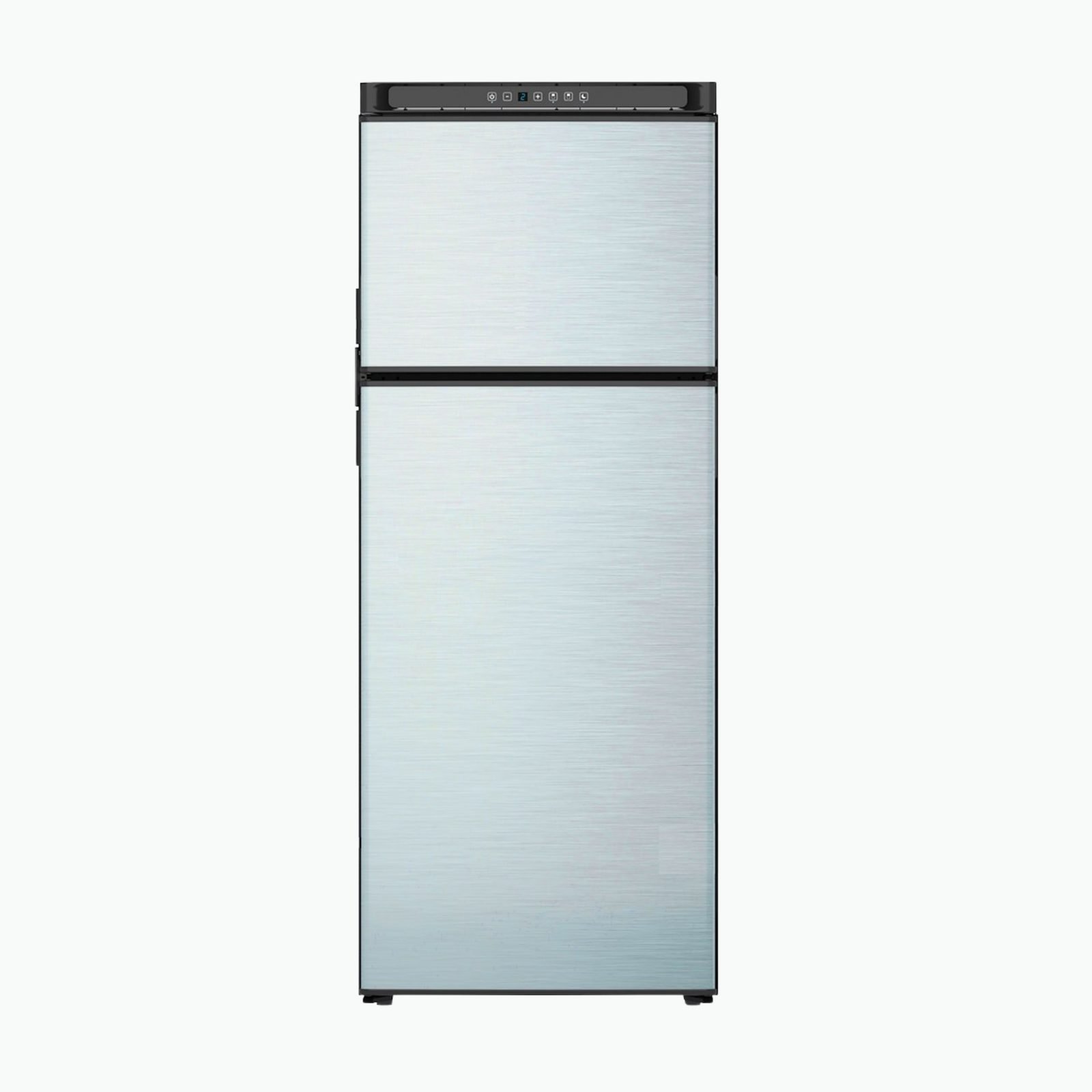
A DC compressor fridge, like the ones in Norcold’s Polar lineup or Dometic’s DMC series, works essentially the same way as a home refrigerator: a compressor circulates refrigerant through a sealed system to actively pull heat out of the cabinet. It runs on 12V battery power only — no propane, no shore power connection required.
Because the cooling is mechanical rather than gravity- and heat-driven, these units aren’t sensitive to how level the RV is parked, and they tend to cool faster and hold a steadier temperature in hot weather than an absorption fridge. The compressor does cycle on and off, so there’s some operating noise, though it’s generally quieter than most rooftop air conditioners or generators running nearby.
Power Draw and Battery Considerations
This is the biggest practical tradeoff. An absorption fridge can run on propane almost indefinitely without touching your house battery, which made it a natural fit for older RVs with modest battery banks. A DC compressor fridge draws exclusively from your battery system, so it needs a battery bank (and ideally solar or another charging source) sized to keep up — especially if you’re boondocking for more than a night or two.
If you’re considering a switch from absorption to a DC compressor model, it’s worth taking stock of your existing battery capacity and charging setup first. Many RVers upgrading to a compressor fridge pair the swap with a battery upgrade or a portable solar setup to keep up with the added draw — our beginner’s guide to portable solar power for RVs and RV battery care guide are good starting points if you’re planning that kind of upgrade.
Installation: Know Your Existing Cutout
Refrigerator replacements are rarely plug-and-play. Absorption fridges vent through a roof or side-wall vent to release heat and combustion byproducts, while compressor fridges don’t need that venting at all since there’s no combustion and no chemical reaction generating heat that has to escape outside. That means swapping an absorption unit for a compressor model (or vice versa) can involve modifying or removing existing venting, not just sliding a new box into the old cutout.
Before buying, measure your existing cabinet opening carefully (height, width, and depth, including door clearance) and compare it against the manufacturer’s specifications for the model you’re considering. If you’re unsure whether a swap will fit without cutting into cabinetry, it’s worth checking with the manufacturer or a qualified RV technician before committing — getting this wrong is an expensive mistake to undo.
What to Look for When Buying
Capacity
RV fridges are sized in cubic feet, and the right size depends on how you travel. A couple doing weekend trips can usually get by with a smaller unit, while a family or full-timer will want more room. Check the cutout size in your RV first — capacity and physical footprint don’t scale together in a simple way across brands.
Door Swing (Left or Right Hand)
Refrigerators are typically built as either left-hand or right-hand opening, referring to which side the hinge sits on. This needs to match your existing cabinet layout, or at minimum give you room to open the door fully in your kitchen space. Several models, including some in Chief Camper’s Norcold Polar lineup, are available in both configurations — double-check which one you need before ordering.
Power Flexibility
If you frequently camp without hookups and want the option to run on propane when battery power is tight, a 2-way or 3-way absorption model (running on AC, DC, and/or LP gas) keeps that flexibility. If your setup is battery-and-solar-first and you’d rather not deal with a propane appliance in the mix, a DC compressor fridge simplifies things.
Stainless vs. Panel-Ready Finishes
Cosmetic finish won’t affect performance, but it does affect fit with the rest of your kitchen. Stainless steel exteriors are common on newer compressor models and hold up well to daily use.
Absorption vs. Compressor: Quick Comparison
| Factor | Absorption | 12V DC Compressor |
|---|---|---|
| Power source | Propane, AC, or DC (varies by model) | 12V DC battery only |
| Leveling sensitivity | Needs the RV reasonably level | Not sensitive to leveling |
| Cooldown speed | Slower, especially in heat | Faster and more consistent |
| Noise | Silent (no moving parts) | Some compressor cycling noise |
| Battery draw | Minimal if run on propane | Constant draw on house battery |
| Venting needed | Yes, exterior vent required | No exterior venting required |
Common Questions
Can I just replace my old absorption fridge with a compressor model in the same spot?
Sometimes, but not always without modification. Because absorption units vent outside and compressor units don’t, you may need to address the old vent opening. Always compare exact dimensions before ordering, and check the installation instructions for the specific model.
Will a compressor fridge kill my battery while boondocking?
It depends on your battery capacity, your charging sources (solar, alternator charging, generator), and how much else is drawing power. A compressor fridge is one of the more consistent daily loads in an RV’s electrical system, so it’s worth sizing your battery bank with that in mind rather than assuming your existing setup will automatically keep up.
Do compressor fridges need any regular maintenance?
They generally need less upkeep than absorption units, which benefit from periodic cleaning of vents and cooling fins. Compressor fridges still benefit from keeping door seals clean and making sure airflow around the unit (where applicable) isn’t blocked.
Browse RV Refrigerators
Chief Camper carries both 12V DC compressor and propane/electric absorption refrigerators, including options from Norcold’s Polar 10 cu. ft. DC compressor lineup, the 8.2 cu. ft. Norcold Polar compressor model, the 6.2 cu. ft. Thetford/Norcold DC compressor fridge, the Dometic DMC4081 8 cu. ft. compressor fridge, and the Norcold Polar N7X 2-way absorption fridge if you’d rather keep propane in the mix. Measure your existing cutout first, and reach out if you’re not sure which configuration fits your rig.