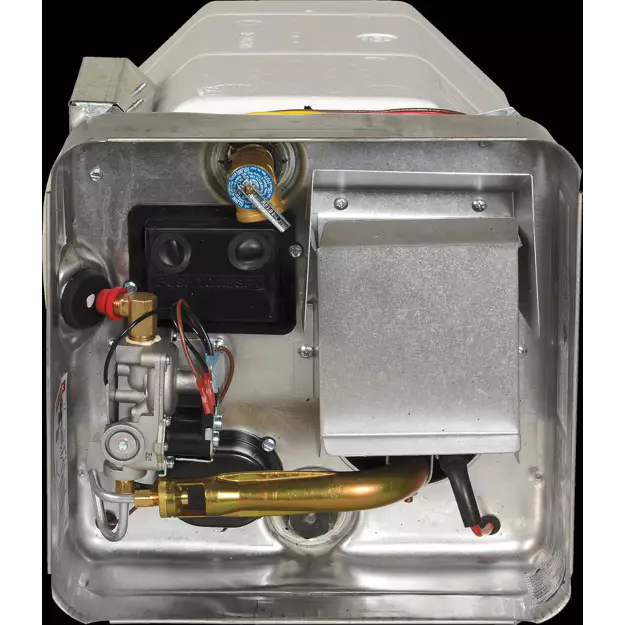
Cold showers on night two usually trace back to one of two mistakes: the wrong heating type for how you camp, or a tank sized for the floor plan instead of the people actually using it. Here’s how to get both right before you buy — including a quick decision flow you can run through in under a minute.
RV Water Heater Decision Sheet
| Do you dry camp / boondock without hookups regularly? | YES → GAS |
| Do you mix hookup sites with off-grid nights? | YES → COMBO |
| Always plugged in or running a generator? | YES → ELECTRIC |
| Group | Capacity | Recovery | Model |
|---|---|---|---|
| Solo / couple | 6 GAL | ~18 min | SW6DE |
| Family of 3–4 | 10 GAL | ~22 min | SW10DE |
| Larger group / 5th wheel | 12 GAL | ~25 min | SW12DE |
Step 1: Run the decision flow
Answer these in order. The first “yes” tells you what to buy:
| Question | If yes |
|---|---|
| Do you dry camp / boondock without hookups regularly? | → Gas (DSI) |
| Do you mix hookup sites with off-grid nights? | → Gas/Electric combo |
| Always plugged in or running a generator? | → Electric (otherwise, combo) |
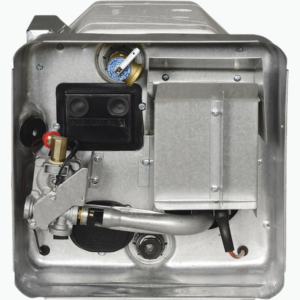
- Gas (DSI) — Direct spark ignition lights the burner off your propane supply. Fastest recovery, fully off-grid, no shore power needed.
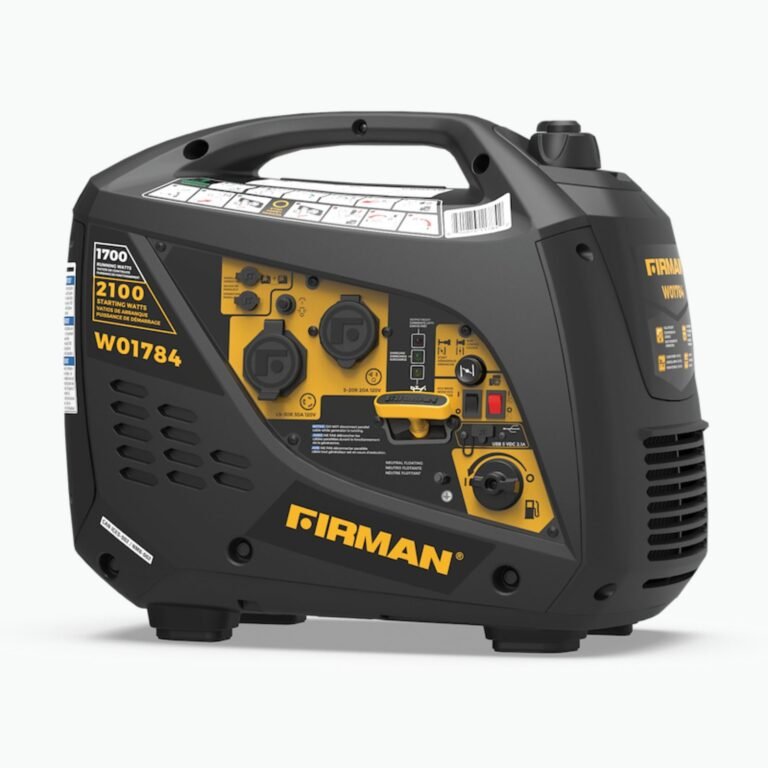
- Electric element — Runs off 120V. Quiet, no propane draw, but only works while plugged in or running a generator.
- Gas/Electric combo — Switch fuel sources depending on hookup status. The most flexible option for mixed camping styles.
Step 2: Match capacity to your crew
Tank capacity isn’t the whole story — recovery rate (how fast it reheats) matters just as much as gallons on board. As a rule of thumb: showers per tank ≈ capacity (gal) ÷ 2.5 gal per quick shower. A 6-gallon tank covers roughly two quick showers back-to-back before it needs to recover.
| Group | Recommended Capacity | Approx. Recovery Time | Suburban Model |
|---|---|---|---|
| Solo / couple, van or small trailer | 6 gallons | ~18 minutes | SW6DE |
| Family of 3–4, travel trailer | 10 gallons | ~22 minutes | SW10DE |
| Larger group / fifth wheel | 12 gallons | ~25 minutes | SW12DE |
Most gas and gas/electric units recover a full tank in about 20–25 minutes. If your crew showers back-to-back rather than spaced out, size up a capacity tier rather than relying on recovery speed alone.
Step 3: Before you check out
Unlike a bare holding tank, a water heater does come with its own access door and ignition control built into the RV — but when you’re replacing a unit, the new heater is usually just the tank and burner assembly. The exterior access door and the interior ignition switch stay tied to your rig’s existing cutout and wiring, not the heater itself. Confirm these four things before you order:
- ☐ Your new heater’s dimensions match the existing cutout
- ☐ Your switch panel wiring supports the fuel type you picked (especially for combo units)
- ☐ The bypass valve is compatible for winterizing
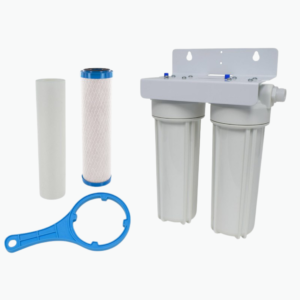
- ☐ You have a pre-filter installed ahead of the heater inlet to protect it from sediment
Shop RV water heaters
Suburban units sized across the range above, plus the accessories that round out the install:
- Suburban SW6DE (Gas/Electric Combo, 6/10/12 Gal)
- Suburban Gas DSI (6/10/12 Gal)
- Suburban DE Model (DSI + Electric Element)
- AquaFRESH Exterior Dual Filter System
Not sure which one fits your rig? Contact our team and we’ll help you match the right unit to your setup.