If you’re new to RVing and keep hearing other campers talk about “throwing out the solar panels” when they park for the day, portable solar kits are what they mean. Unlike panels permanently mounted to the roof, a portable kit is designed to be set up on the ground, angled toward the sun, and packed away when you leave — a simple way to add charging capacity without any installation.
What a Portable Solar Charging Kit Actually Is
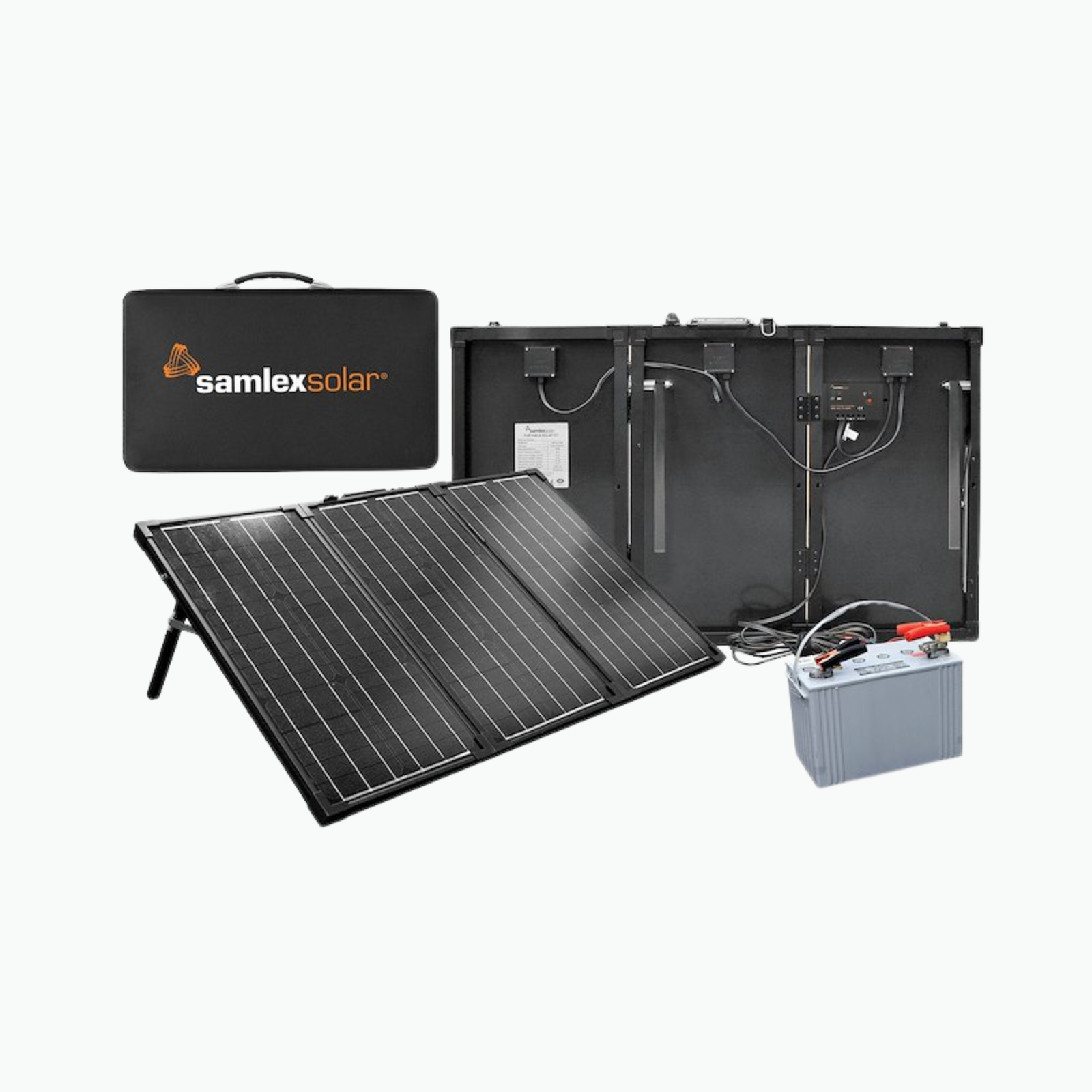
A portable solar kit is a folding panel (or set of panels) connected by cables to a charge controller, which then connects to your RV’s house battery. Instead of drilling into your roof and running wire through the ceiling, everything stays external and gets stowed when you’re driving or done for the day. That makes portable kits a popular starting point for anyone who wants to reduce generator use or extend how long they can stay off-grid without committing to a full rooftop solar installation.
How the Pieces Work Together
The Panel
The solar panel converts sunlight into DC electricity. How much power it can produce at any moment depends on the panel’s wattage rating, how directly it’s facing the sun, and how much of it is in shade — even a small amount of shadow on a panel can significantly cut its output.
The Charge Controller
This is the piece that makes solar safe and useful rather than just a raw wire running into your battery. A charge controller regulates the voltage and current coming from the panel so your battery is charged properly and not overcharged. Most portable kits include a controller built into the setup, which is worth confirming before you buy separately.
The Battery
Solar doesn’t power your appliances directly — it charges your house battery, and your battery powers everything else. This matters because your battery’s size and condition determine how much of that solar charging you can actually store and use. A small or aging battery bank limits what even a good solar setup can do for you.
What Watts Mean in Practice
A panel’s wattage rating is essentially its maximum charging speed under ideal sunlight — direct, unobstructed sun, close to the correct angle. Higher wattage means faster charging in good conditions, but real-world output is almost always lower than the rated number because of cloud cover, panel angle, time of day, and partial shade. This is why portable kits are typically sized in the range of 90 to 200-plus watts for RV use rather than the much larger arrays used for whole-home solar.
What Portable Solar Can (and Can’t) Do
Portable solar is well suited to topping off your house battery during the day so you have power for lights, water pump, fans, phone charging, and other low-draw 12-volt items overnight, especially when boondocking or dry camping without hookups. It’s not designed to run high-draw appliances directly, like a rooftop air conditioner, and it won’t fully replace a generator or shore power for heavy electrical use. Think of it as extending how long your existing battery lasts, not as an unlimited power source.
Portable vs. Roof-Mounted Solar
| Portable Kits | Roof-Mounted Solar |
|---|---|
| No installation or roof penetrations | Requires mounting and wiring through the roof |
| Can be angled directly at the sun for better output | Fixed angle, output depends on where the RV is parked |
| Can be moved into sun while the RV sits in shade | Only charges when the RV itself is in sunlight |
| Needs to be set up and packed away each time | Charges automatically, even while driving |
| Vulnerable to being left out and needing supervision | Out of the way and less exposed to theft or damage |
Many RVers use portable solar as a lower-cost way to try solar power before deciding whether to invest in a permanent rooftop system, or keep a portable kit as a flexible supplement even after installing panels on the roof.
Getting Started
Chief Camper carries the Samlex Portable Solar Charging Kit, available in 90-watt and 135-watt versions, in the Power & Electrical category. If you’re not sure which size fits your setup, consider how you camp: occasional weekend trips with light electrical use can often get by with a smaller panel, while extended boondocking with multiple devices and a larger battery bank benefits from the extra wattage.
FAQs
Do I need a special battery for solar charging?
No special battery is required, but your existing battery type (lead-acid, AGM, or lithium) affects how it should be charged, which is exactly what a charge controller manages for you.
Can portable solar fully replace my generator?
For light, low-draw use it can significantly reduce how often you need a generator, but it’s not a direct replacement for running high-wattage appliances.
Do portable panels work on cloudy days?
They’ll still produce some power, but output drops noticeably compared to direct sun. Plan for reduced charging on overcast days rather than counting on full output.
Portable solar is one of the simplest upgrades for extending your time off-grid without any RV modifications. Pair it with good habits around your battery — like the ones covered in our guide to RV battery care and winter storage — and you’ll get more useful life out of both.